

Holiday parks and hotel groups are running multi-million pound operations on spreadsheets, WhatsApp and gut instinct.
This is not a criticism. It is an observation about how the leisure and hospitality sector has scaled, and about the gap that has opened up between the complexity of modern resort operations and the tools most businesses are using to manage them.
A large holiday park or hotel group in 2026 is, in operational terms, an extraordinarily complex organism. Accommodation bookings across hundreds of units. Activity and entertainment scheduling. F&B operations running across multiple outlets. Maintenance and facilities management across a substantial estate. Seasonal workforce recruitment and deployment. Owner relations for holiday home and lodge inventory. Revenue management across a dynamic pricing environment.
Each of these functions has its own data, its own team, and often its own disconnected system. The result is an operation where the left hand frequently does not know what the right hand is doing, and where decisions that could be informed by data are instead made on the basis of whoever happens to be in the morning briefing.
In this article, we look at:
- The fragmentation problem in practice
- Why the usual solutions have not worked
- What an integrated operational platform actually looks like
- The multi-site case for acting now
- The practical starting point
The fragmentation problem in practice
Consider a scenario that plays out daily across large leisure operators. A family arrives on site to find their lodge is not ready at the promised time. The reason, when it is eventually established, is that a late checkout on the previous booking was not communicated to the housekeeping team, who were working from a paper run sheet updated at 8am. The duty manager finds out when the guests arrive at reception. The guest experience team finds out when the review goes live.
Nobody in this scenario was negligent. The system failed them. Information that existed in one part of the operation did not reach the people who needed it, at the moment they needed it. This is not an edge case. Versions of this scenario happen hundreds of times a day across the sector, in maintenance, in catering, in activity bookings, in owner services.
The operational and reputational cost of fragmented systems is significant. Staff spend time chasing information that should be instantly available. Decisions are made on incomplete pictures. Problems that could have been prevented become complaints that have to be managed. And the management team is perpetually reactive rather than strategic, because the data infrastructure required to plan ahead simply does not exist.
Why the usual solutions have not worked
The hospitality technology market is not short of products. Property management systems, booking platforms, CRM tools, workforce scheduling software, maintenance management apps. Most sizeable operators have several of these in place.
The problem is that they do not talk to each other. Each system holds a piece of the picture. None of them holds the whole thing and the connective tissue between them is typically a combination of manual data entry, exported spreadsheets, and informal communication channels that work well enough on a good day and catastrophically on a bad one.
Generic enterprise software platforms have not solved this either. They are designed for industries with standardised workflows and predictable operational patterns. Hospitality, and leisure hospitality in particular, is neither of those things. The rhythms of a holiday park do not map neatly onto the assumptions built into a generic ERP system, and the customisation required to make them fit tends to be expensive, slow, and ultimately unsatisfying.
What an integrated operational platform actually looks like
The answer is not another SaaS tool. It is a connected operational layer built around how leisure and hospitality businesses actually run, rather than how a vendor thinks they should.
What that means in practice is a mobile-first platform that connects the functions that need to work together in real time. Housekeeping teams receiving live updates when checkout times change. Maintenance operatives logging and closing jobs from their phones, with automatic escalation when tasks are overdue. Duty managers seeing a live operational picture across the whole site, not a static report from yesterday. Revenue teams and operations teams working from the same data, rather than from separate systems that periodically sync.
The mobile element is not incidental. Leisure and hospitality operations are inherently mobile. The people doing the work are not sitting at desks. A platform that requires staff to return to a terminal to log information is a platform that will not be used consistently, and inconsistent data is barely better than no data.
AI adds the layer that turns operational data into operational intelligence. Predictive maintenance that flags equipment likely to fail before it does. Demand forecasting that helps staffing teams schedule more accurately across the season. Anomaly detection that surfaces operational issues before they become guest-facing problems. These capabilities are not experimental. They are being deployed by operators who have made the decision to build the right infrastructure.
The multi-site case for acting now
For operators running a single site, operational fragmentation is a manageable inconvenience. For operators running ten, twenty, or fifty sites, it is a strategic liability.
The operators who have connected their operations are able to see patterns across their portfolio that single-site thinking would never surface. Which accommodation types generate the most maintenance calls. Which sites have the strongest correlation between F&B spend and overall guest satisfaction scores. Which operational practices at a high-performing site could be replicated elsewhere. None of that analysis is possible when data lives in disconnected silos.
The investment case is also straightforward when the true cost of fragmentation is properly accounted for. Reactive maintenance is consistently more expensive than preventive maintenance. Staff time spent on information-chasing is staff time not spent on guests. Complaints that could have been prevented cost more to resolve than the operational fix that would have stopped them.
The practical starting point
The operators who have made the most progress on this have not typically attempted a single transformational overhaul. They have identified the highest-cost fragmentation in their operation and started there.
For some, that is the housekeeping and maintenance interface, because the cost of getting it wrong is immediate and visible. For others, it is the connection between revenue management and operational planning, because the two functions are making decisions that affect each other without a shared data foundation. For others still, it is workforce management, because the cost of seasonal overstaffing and understaffing is material and directly addressable with better scheduling data.
The technology to fix these problems is not complicated. What it requires is clarity about where the operational cost is highest, a willingness to build for how the business actually runs rather than how a generic platform expects it to, and a delivery partner who understands the sector well enough to ask the right questions before they write a line of code.
The spreadsheets and WhatsApp groups are a workaround. They exist because the right tools have not been built yet. For the operators who commission those tools in the next year or two, the operational advantage will be substantial and durable.
Watch On-Demand: Loyalty Unlocked – The Power of Mobile Apps in Hospitality
Discover how to boost guest loyalty and modernise your hospitality experience in our free 30-minute on-demand webinar.
In this session, you’ll learn:
-
How personalisation in apps drives loyalty
-
Ways modern app development lowers costs and simplifies delivery
-
The hidden cost of outdated systems on guest experience
-
Lessons from leading hospitality brands like Crystal Ski
What You’ll Take Away
-
Practical steps to modernise your guest experience
-
Easy ways to scale personalisation without adding cost or complexity
-
A clear roadmap to replace outdated systems and avoid common mistakes
👉 Watch the webinar on demand and unlock your loyalty potential today.
Speak to an Expert & Book Your Free Discovery Session
Exploring a mobile app for your hospitality business doesn’t have to be complicated. With expert guidance, the process can be faster, smarter, and more effective — helping you make decisions with confidence and focus.
At Vidatec, we work with hospitality teams to:
-
Understand your current digital systems and guest experience gaps
-
Identify opportunities where a mobile app will have the biggest impact
-
Discuss practical, cost-effective solutions tailored to your business
-
Create a clear, actionable roadmap for implementation
-
Ensure personalisation and usability are at the heart of your solution
Whether you’re just testing the waters or ready to modernise your entire guest experience, our team can guide you every step of the way.
👉 Speak to one of our experts and start exploring mobile app solutions that will delight your guests and boost loyalty.
Hospitality is built on experience, and apps are now the foundation of that experience. Outdated systems hurt loyalty and revenue, but modern, personalised apps can transform every interaction into an opportunity to delight guests. Start by understanding your current gaps, focus on personalisation, and give your guests a digital experience they’ll remember, and return for.
Let Our Team Help Your Team
Take the Next Step to Delivering a Better Employee Experience Through AI with Vidatec
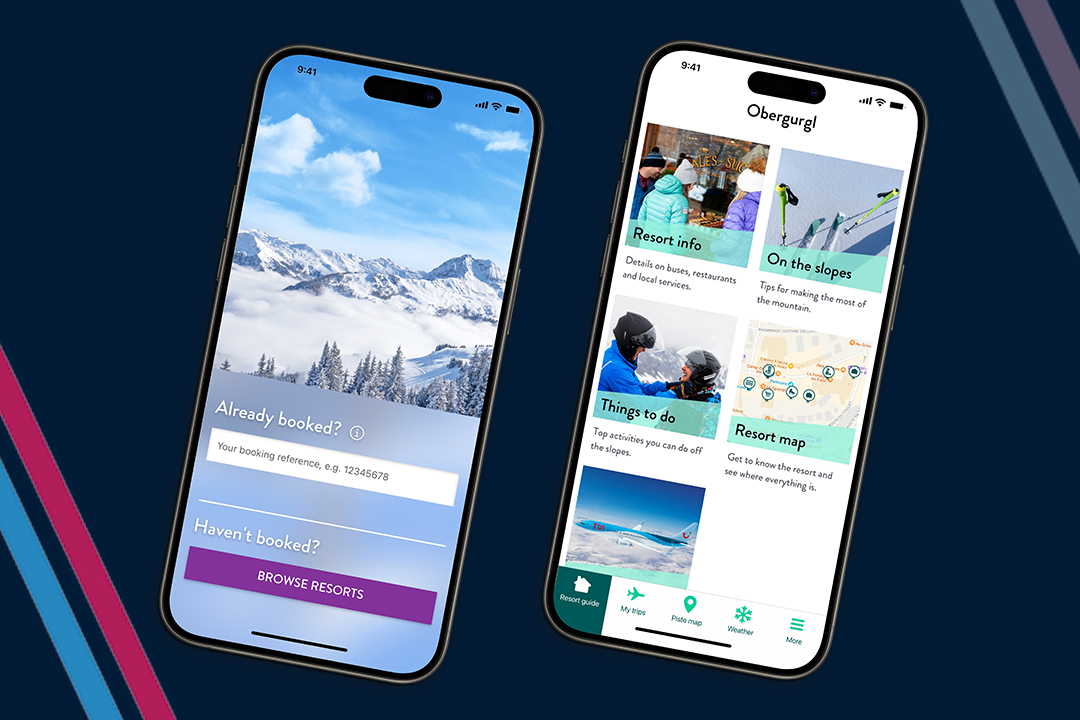
Learn More About our work with Crystal Ski
The Crystal Ski Explorer app puts everything skiers need right at their fingertips—helping them hit the slopes with all the info they need, exactly when they need it.
Read More Insights
Hear directly from the Vidatec team about why your guests have already decided whether they’re coming back before they’ve checked out. And you have no idea.

Read More of Our Latest Insights on Mobile Apps & Guest Experience
Want more practical insights from our tech team? We regularly share real-world lessons from building AI solutions, developing apps, helping businesses transform digitally, and tackling challenges across different industries.






Meet the author