
How to Build an AI Roadmap Without Overcomplicating It
Most AI roadmaps fail before they’re even finished. They’re too long, too technical, too expensive; and they sit in a folder while the business stands still. If you’ve tried to plan your AI journey and ended up with a 40-page strategy document that nobody acts on, you’re not alone. The problem usually isn’t the ambition. It’s the approach. In this guide, we share a simpler way to build an AI roadmap that’s practical, phased, and designed to actually get used.
What is an AI roadmap and why does yours probably not exist yet?
Explain what an AI roadmap is in plain English, not a technical definition, but a practical one. A roadmap is simply a prioritised list of where AI can make a real difference in your business, in what order, and roughly how you’ll get there. Call out the common failure mode: organisations either skip the roadmap entirely and buy tools at random, or they commission an overcomplicated strategy document that never gets off the slide deck. Reference the Cisco stat (97% of CEOs plan AI integration but only 1.7% feel prepared) to validate the reader’s experience.
As an AI consulting firm, we don’t just talk about AI – we build with it daily. In this article we will dicuss:
– The five things that make an AI roadmap too complicated
– A practical five-step process on how to build your AI roadmap
– Common questions about building an AI roadmap
The five things that make an AI roadmap too complicated
- Trying to solve every problem at once
- Letting the technology lead instead of the business need
- Skipping the readiness question (are your people and processes ready?)
- No clear owner or accountability for delivery
- Treating it as a one-off project rather than an ongoing evolution
How to build your AI roadmap, a practical five-step process
Step 1: Start with friction, not features
Before looking at any AI tools, identify the top 3–5 processes in your business that cause the most frustration, error, or wasted time. These are your starting points. Don’t start with ‘what can AI do?’ start with ‘where are we losing time or quality today?’
Step 2: Assess your readiness honestly
An AI tool is only as good as the team using it and the data behind it. Before committing to any solution, be honest about your current state: data quality, team confidence, integration requirements, and governance. Link to the AI readiness assessment page on Vidatec.com.
Step 3: Prioritise quick wins over transformations
Your first AI projects should be achievable within weeks, not months. Quick wins build confidence, create internal champions, and demonstrate to leadership that AI delivers real value. Vidatec’s rule of thumb: if the first phase can’t show a measurable result within 30–60 days, it’s probably too ambitious to start.
Step 4: Build your roadmap in phases, not as a fixed plan
A roadmap should be a living document. Phase 1 is your quick wins. Phase 2 builds on what you’ve learned. Phase 3 starts to address more complex or organisation-wide changes. Each phase should have a clear owner, a realistic timeline, and a defined measure of success.
Step 5: Put adoption before implementation
The most common reason AI projects fail isn’t the technology — it’s adoption. Build in time for training, change management, and internal communication at every phase. Your people need to understand the why before they’ll embrace the how.
Still unsure how to get started? Check out our AI Readiness assesment.
Common questions about building an AI roadmap
How long should an AI roadmap take to create?
A working first version can be ready in 1–2 weeks if you start with a focused discovery process. It doesn’t need to be perfect — it needs to be actionable.
Do we need a technical team to build an AI roadmap?
No. The first version is a business document, not a technical one. You need people who understand your processes and your team, not necessarily people who understand AI.
Should we build AI in-house or work with a partner?
Building AI with a partner is often the smarter choice, especially early on, because it accelerates development and reduces risk. Studies suggest that companies collaborating with experienced AI partners are 2–3x more likely to successfully deploy and scale AI solutions compared to going fully in-house. You can always bring capabilities in-house later once you’ve built the right foundation. Find some of our AI consulting and build work here.
What if our data isn’t ready for AI?
Most organisations’ data isn’t in perfect shape: that’s normal. Identifying data gaps is actually part of what a good AI roadmap process does. You don’t need to wait until everything is perfect.
Getting started with your AI roadmap
If you’re not sure where to start, an AI readiness workshop is usually the best first step. It helps you identify your highest-impact opportunities and gives you the foundation for a roadmap that’s specific to your business; not a generic template. Speak to the Vidatec team to arrange yours.
Move from AI Chaos to AI Clarity
If your organisation is experiencing fragmented pilots, unclear boundaries, regulatory anxiety or difficulty scaling beyond experimentation, it is time to move from chaos to clarity. Download the whitepaper and take the first structured step toward building AI systems that work
Take the Next Step to Delivering a Better Employee Experience Through AI with Vidatec

Learn More About our AI Consulting Services
We cut through the AI hype to help you understand what actually works in your specific situation. Drawing from 300+ real-world projects, we help you implement AI in simple, practical steps that actually stick and deliver results.
Watch our 30-Minute Expert-Led AI Webinar
Hear directly from our CEO, Ross Wilson, and CTO, Nick Welch, as they provide a framework to assess your organisation’s AI readiness and outline practical tools and strategies to implement a true human-first AI implementation.

Read More of Our Latest Insights on AI and Employee Experience
Want more practical insights from our tech team? We regularly share real-world lessons from building AI solutions, developing apps, helping businesses transform digitally, and tackling challenges across different industries.



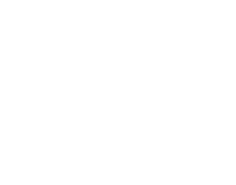


Meet the author